Playbook · August 14, 2026 · 8 min read
How an AI Sales Assistant Improves Lead Follow-Up
Build a reliable AI sales assistant for lead research, personalized follow-up, CRM updates, and timely handoffs without losing human control.
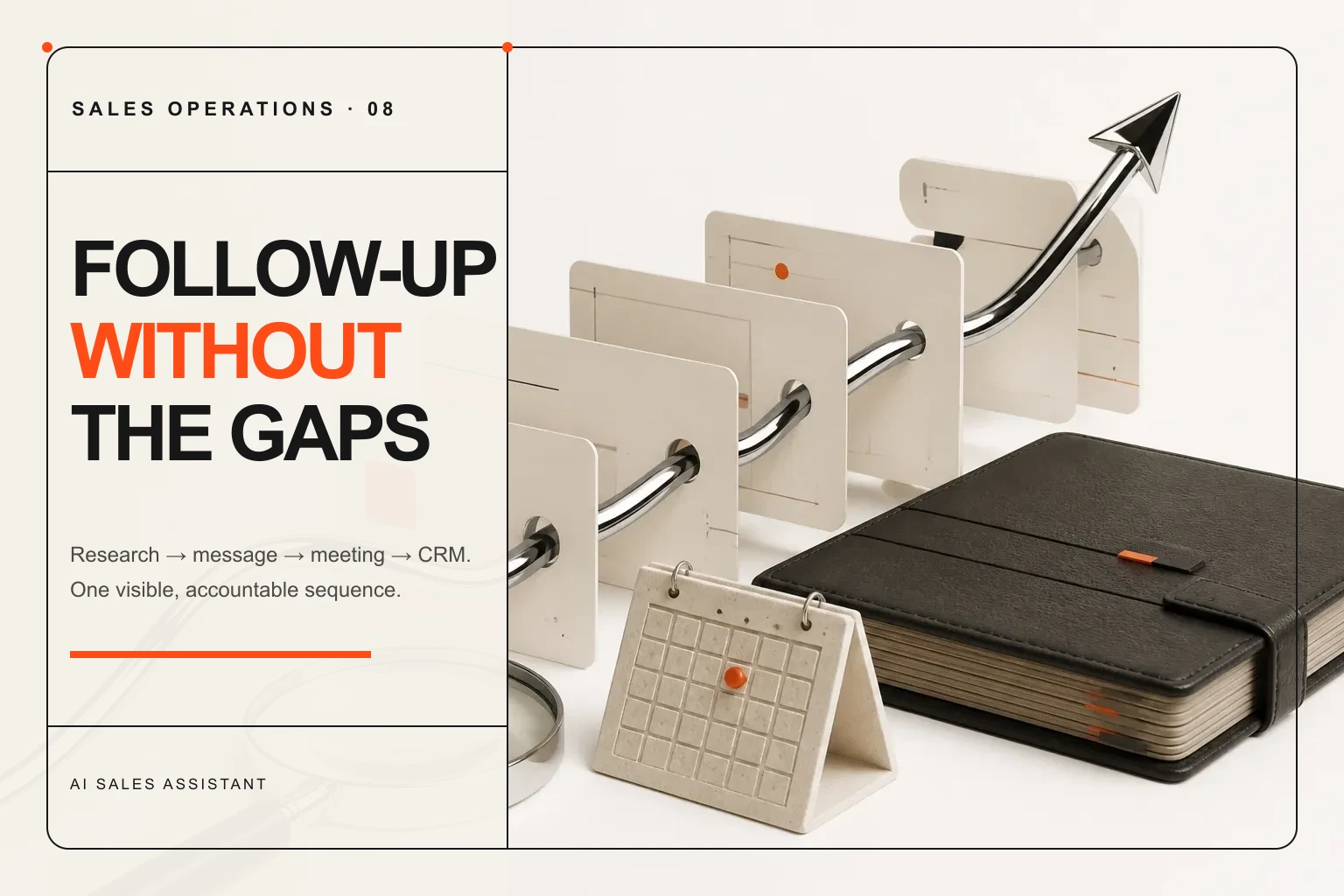
Lead follow-up is a strong use case for an AI sales assistant because the work is time-sensitive, repetitive, and scattered across email, calendars, and a CRM. The best systems do not replace the account executive's judgment. They make sure every qualified signal becomes a researched, relevant next step while the details are still fresh.
01What does an AI sales assistant do?
An AI sales assistant monitors agreed lead sources, enriches context from approved systems, prepares outreach, schedules follow-ups, updates records, and hands qualified opportunities to a person. It can work continuously, but its role should remain specific enough that the team can evaluate every result.
- Respond to demo requests and other high-intent inbound leads quickly.
- Research the company, role, account history, and relevant product fit.
- Draft personalized emails using approved claims and positioning.
- Create reminders or proposed meeting times based on explicit rules.
- Record activity and handoff notes in the CRM after the action succeeds.
02Start with inbound follow-up
Inbound leads are usually safer than cold outbound for a first AI sales workflow. The person has already shown intent, the response objective is clear, and the company can define what information belongs in the first message. Begin with one form, event, or pipeline stage instead of asking the system to prospect across the entire market.
The first win is not more email. It is fewer qualified leads waiting without a useful next step.
03Define the research boundary
Tell the AI sales assistant which sources it may use and which claims it may make. First-party CRM history, the lead's submitted details, and your approved product knowledge should outrank open-web inference. If a fact cannot be verified, the draft should omit it or flag it for review rather than manufacture personalization.
04Design a supervised outreach sequence
A reliable sequence separates preparation from execution. The assistant can gather context and draft the message automatically, while sending waits for approval during the initial rollout. After the pattern is proven, low-risk messages can run autonomously and unusual accounts can continue to wait for a salesperson.
05Protect deliverability and trust
Volume is the easiest metric to increase and one of the least useful. Set daily limits, suppression rules, working hours, approved domains, and stop conditions. Prevent duplicate sends when a person has already replied or an opportunity changes stage. Every outbound message should be connected to a real signal and a named business purpose.
06Measure the complete sales outcome
Track speed to first useful response, approval rate, edit rate, reply rate, meetings booked, qualified opportunities created, and CRM completeness. Compare performance by workflow and lead segment. If drafts are heavily edited, the solution is usually better instructions or context—not simply more autonomy.
07Where AI belongs in sales
An AI sales assistant is most valuable in the operational gap between interest and human attention. Let it watch for signals, assemble context, prepare consistent work, and maintain the record. Keep pricing exceptions, negotiation, relationship judgment, and sensitive commitments with the people accountable for the deal.
Alex Renner
Product, Syntrum